


News
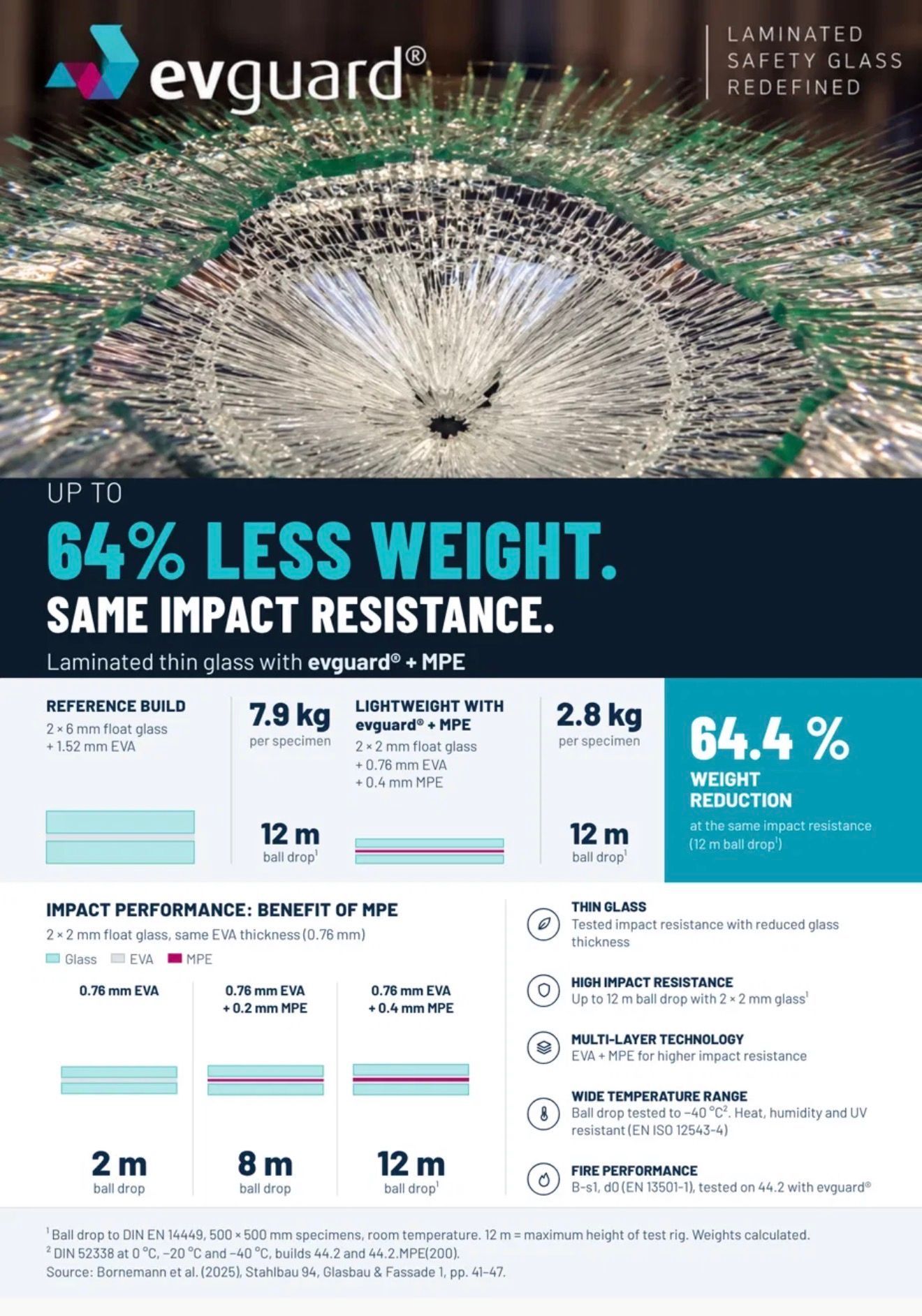
Up to 64% less weight. Same impact resistance.
Two panes of just 2 mm float glass, laminated with an evguard® + MPE multilayer interlayer, reached the same maximum drop height of 12 m in ball drop tests to DIN EN 14449 as a reference laminate made of 2 × 6 mm glass with 1.52 mm EVA.
That is 2.8 kg instead of 7.9 kg per 500 × 500 mm test specimen, a weight reduction of 64.4%.
The MPE film makes the difference. With 2 × 2 mm glass and the same EVA thickness of 0.76 mm, the drop height rises from 2 m without MPE to 8 m with 0.2 mm MPE and 12 m with 0.4 mm MPE.
The study was carried out together with TU Dresden and published in Stahlbau, Glasbau & Fassade 2025.
For architects, façade engineers and glass processors, this means more freedom in lightweight glazing.
We will present the results at glasstec 2026 in Düsseldorf. Visit Folienwerk Wolfen in Hall 10, Booth H31, from 20 to 23 October and talk to our team about how evguard® and evguard® MPE can support your next project.
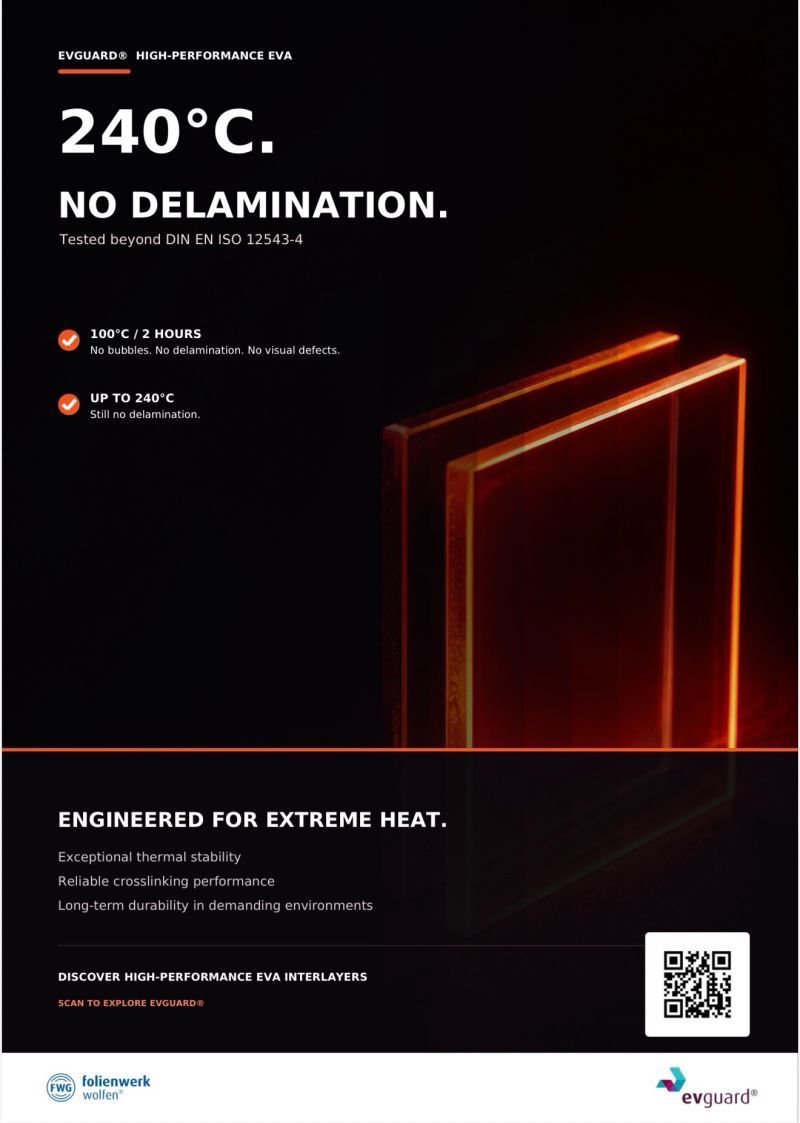
240 °C. No delamination.
What does thermal stability mean for laminated glass in practice?
For architects, it means greater certainty when specifying laminated glass for demanding facades, interiors, and technically complex constructions. For glass processors, it means a reliable interlayer with consistent cross-linking behavior and a robust lamination result. evguard EVA laminating films have been tested according to DIN EN ISO 12543-4 and independently certified by ift Rosenheim.
- 100 °C for 2 hours: no blistering, no delamination, no optical defects
- Extended testing up to 240 °C: still no delamination, only slight yellowing under extreme stress.
These temperatures are far above the levels most applications will ever be exposed to. However, they demonstrate the enormous performance potential of evguard.
Save the date: glasstec 2026!
From October 20th to 23rd, the international glass industry will meet in Düsseldorf – and the team from Folienwerk Wolfen will be there again!
We look forward to discussing the future of laminated glass with you – from evguard® to evguard® MPE – as well as seeing familiar faces again and making new contacts.
Visit us at glasstec in Düsseldorf:
📅 October 20–23
📍 Hall 10, Booth H31

Fire behavior is important. Knowing the difference is even more important.
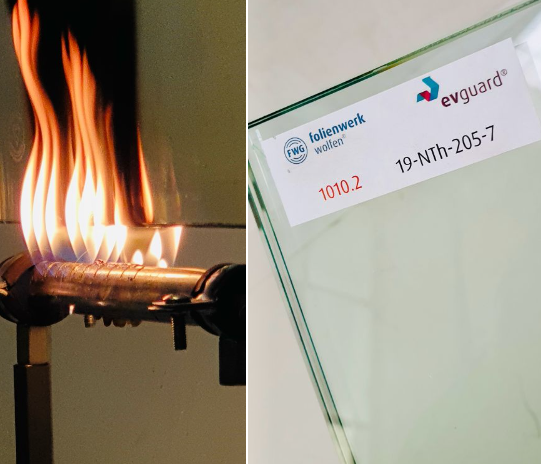
Fire behavior is a crucial planning parameter whenever laminated safety glass is used in buildings and compliance with building regulations is required. It is relevant for facade applications, overhead glazing, parapets, interior glazing, and projects where low smoke emission and controlled fire behavior are essential. When specifying laminated glass, it is important to distinguish between fire behavior and fire resistance. These are two distinct classifications with different objectives. Our evguard® EVA interlayer is certified for fire behavior according to EN 13501-1 and has the following classification: B-s1,d0 This means that the laminated glass has the following properties:
- Very limited contribution to the fire (Class B)
- Very low smoke development (s1)
- No burning falling pieces/drops (d0)
Other certified test results include:
• EN ISO 11925: No ignition
• EN 13823 (SBI): No afterburning